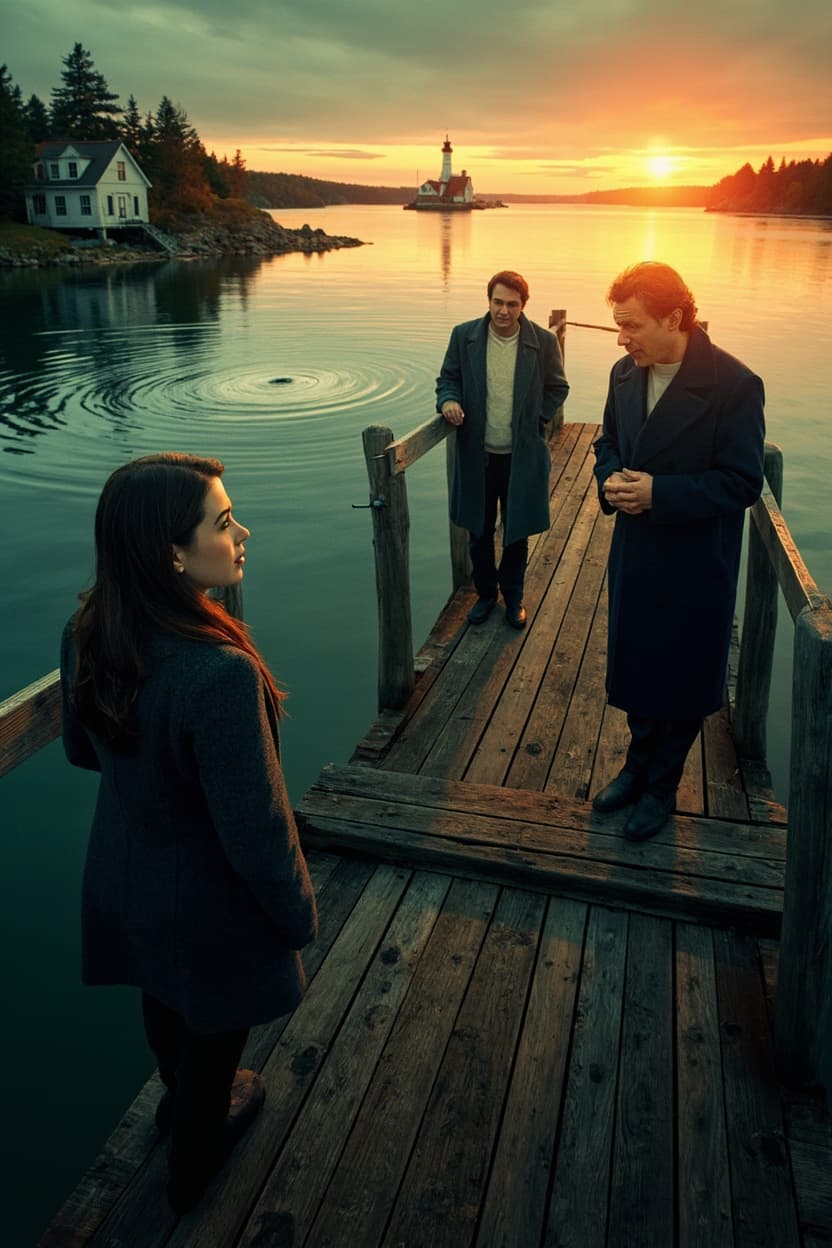
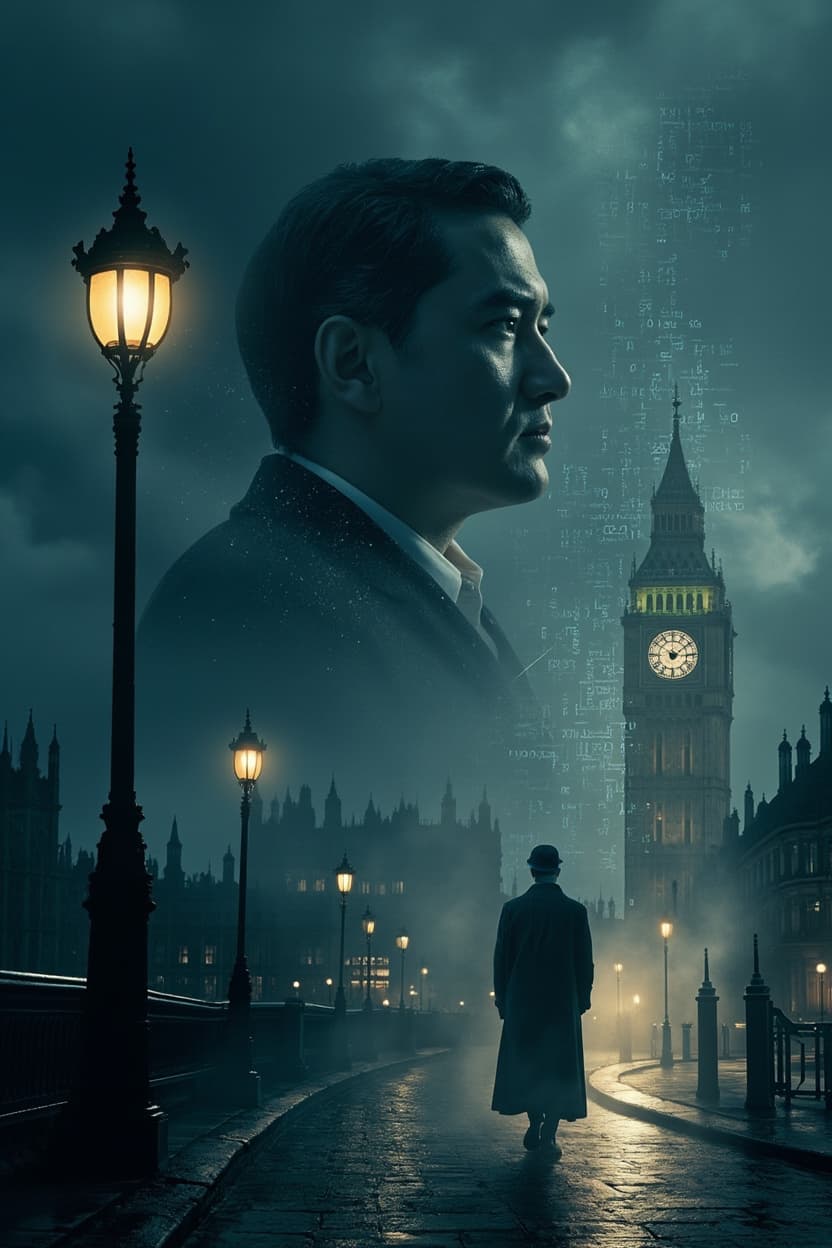
The Ellis Hotel Group owned fourteen properties across the eastern seaboard. Seven of them were hemorrhaging money.
Sloane Ellis sat in the mahogany office her father had occupied for thirty-one years and read the numbers until they blurred. The quarterly reports were a cadaver she'd been asked to perform surgery on, and she had no scalpel—only a fountain pen she'd inherited from the same man who'd left her the wound.
Twenty-six years old. Fourteen hotels. Four hundred million dollars in debt.
She closed the report and looked at the Manhattan skyline through the window. The Ellis flagship, the old Plaza-adjacent grand dame that bore her family name in gilded letters, occupied a full block of Fifth Avenue. Three thousand employees. Forty-two conference contracts. A loyalty program with 180,000 active members. And a drowning pool of debt that her father, Gerald Ellis, had hidden behind optimism and quarterly projections that never materialized.
He'd jumped from the eighteenth-floor terrace of the Ellis Grand six weeks ago. Left a note that said nothing useful. Left Sloane holding a empire that was already a ghost.
The intercom buzzed. Her assistant's voice, carefully neutral: "Ms. Ellis. Vance Capital is on the line. They want to know if you've made a decision."
Vance Capital. The vulture fund that had circled Ellis Hotels since the moment Gerald's death became public. Maxim Vance's firm had made three offers already—each one lower than the last, each one a carcass-picker's dream. They'd offered eight hundred million for the whole portfolio. The debt was four hundred million. The math looked appealing until you realized they were pricing in the liquidation of three thousand jobs and the erasure of a name that had stood on this avenue since 1922.
"Tell them I haven't changed my mind," Sloane said. "The Ellis name is not for sale."
She hung up before her assistant could respond.
The truth was worse than the numbers. The truth was that Sloane had already tried everything. She'd approached every major bank on the Street. She'd pitched private equity firms who nodded politely and asked when Gerald Ellis's funeral was. She'd even reached out to her father's oldest rival, a hotel magnate named Charles Whitfield who'd once tried to buy Ellis Hotels in 1987 and been told to go to hell by Gerald himself.
Everyone said the same thing: the brand was tarnished, the debt was suffocating, and the only way forward was a complete liquidation under Vance Capital's banner. They said it kindly, the way doctors deliver terminal diagnoses.
Sloane refused.
She walked to the wall safe behind her father's desk—the one she'd had the combination changed to after the funeral—and opened it. Inside was a single folder, manila, unmarked. The merger agreement she'd been working on for three weeks.
The Blackstone Consortium wanted to buy a 40% stake in Ellis Hotels for 1.2 billion dollars. It would wipe out the debt. It would give Sloane a controlling share to run the company as she saw fit. It would save the Ellis name.
All it required was Gerald Ellis's signature.
Gerald Ellis was dead.
Sloane stood there for a long time, looking at the blank signature line at the bottom of page forty-seven. The safe's interior light hummed. The Manhattan evening pressed against the windows like something wanting in.
She thought about her father at sixty-two, gray at the temples, refusing to believe his empire was failing until the numbers were too obvious to ignore. She thought about him on the eighteenth-floor terrace in the predawn dark of a Tuesday morning. She thought about the note he'd left, which said only: Tell Sloane I'm sorry.
Sorry wasn't a number. Sorry didn't pay salaries.
She picked up her father's fountain pen—his personal Montblanc, the one he'd used for thirty years—and pressed the nib to the paper.
The signature looked perfect. She'd practiced it in her own office for three nights running, studying the way Gerald formed his G's and the slight leftward drift of his L's. She knew his handwriting better than she knew her own. He'd never let her work at Ellis Hotels when she was growing up—You earn your own way or you don't come in—so she'd spent her summers in the lobby, watching him sign papers with that Montblanc, and she'd memorized every stroke without ever meaning to.
She signed for her father.
She dated it. She initialed the changes in the margins. She did everything the notaries would expect, and when she was done she sat back and felt nothing at all—only the strange, hollow silence that follows a moral catastrophe.
Three days later, the merger closed. The Blackstone Consortium wired the first tranche. Sloane paid down two hundred million in debt and watched the Ellis name climb back toward solvency. She told herself it was for the employees. She told herself it was for the legacy. She told herself a lot of things in those early weeks, and none of them were quite enough to fill the space where her integrity used to be.
She didn't hear from Maxim Vance for seventy-two hours after the merger went public.
On the seventy-third hour, he walked into her office without an appointment.
Sloane looked up from a staffing report and felt the room tilt. She'd seen photographs. Everyone in New York had seen photographs—Maxim Vance in charcoal three-piece suits, standing on the steps of his own building, looking like a theorem that had learned to wear clothing. But photographs didn't capture the way he occupied space, the cold arithmetic of his gaze, the absolute stillness that made everyone around him seem like background noise.
"Ms. Ellis," he said. Not hello. Not an introduction. Just her name, delivered like a file number.
She didn't stand. "Mr. Vance. I'm afraid I don't have an appointment."
"No," he agreed. "You don't." He placed a folder on her desk—slim, professional. "I assume you know what this is."
She didn't touch it. "Enlighten me."
"Blackstone Consortium. Forty percent stake. 1.2 billion valuation." He paused, letting the words settle. "A very interesting merger, given that Gerald Ellis died six weeks ago."
The room went very quiet. Sloane became aware of the hum of the air conditioning, the distant sound of traffic twelve floors below, the way her own pulse had begun a slow, relentless acceleration in her throat.
"I've seen the document," Maxim continued. He hadn't sat down. He stood over her desk like a magistrate. "Page forty-seven. Signature line. I've also had it analyzed by three independent document examiners." He tilted his head slightly, the way a cat tilts its head when it's decided something isn't food. "In the event that you're wondering—we can tell."
Sloane kept her face very still. It was the only armor she had left.
"I don't know what you're talking about," she said.
"Of course you don't." Maxim opened the folder himself. Inside were photographs—photographs of the merger document, of the signature, of the date stamp. "The document went through the standard filing process. Which means it passed through fourteen sets of hands at three institutions. One of those institutions is a subsidiary of a firm that I own eighteen percent of. One of those fourteen people recognized the name and called me directly."
He closed the folder.
"So let's not do this," he said. "The forgery is documented. The document examiners are on retainer. I have enough to put you in prison for five to seven years on charges of securities fraud, contract fraud, and falsification of a legal instrument." He paused. "That's not counting the civil liability, which would consume whatever portion of the Ellis estate survives your incarceration."
Sloane felt something cold move through her—the same thing she'd felt the morning she found out her father was dead. A structural failure. Everything she'd built herself around collapsing at once.
"What do you want?" she said. Her voice came out steady, which surprised her.
Maxim Vance looked at her for a long moment. He had gray eyes—not blue, not green, but something that belonged to no particular weather. They assessed her the way a surgeon assesses an incision.
"The Ellis portfolio," he said. "I want what I've always wanted. But the terms have changed."
"Changed how?"
He smiled. It was the least warm smile she had ever seen on a human face.
"You'll find out by end of business tomorrow," he said. "I suggest you make yourself available."
He turned and walked out of her office without waiting for a response. His footsteps on the hardwood floor sounded like a clock counting down.
Sloane sat very still until his shadow cleared the doorway. Then she picked up her desk phone and called Declan Holt, her lawyer, and told him to come in immediately.
By the time he arrived twenty minutes later, she'd already taken the merger document out of the safe and put it in her briefcase. She didn't know what she was going to do with it. She only knew she wasn't going to let it sit in that wall safe like a time bomb any longer.
Declan found her standing at the window, watching the street below. She didn't turn around when he came in.
"I need to tell you something," she said. "And I need you to not lecture me until I'm done."
There was a long pause. Then Declan said, quietly, "Okay."
She told him.
When she finished, the Manhattan evening had turned fully dark, and the office across the street had begun to light up one window at a time, like a city confessing itself floor by floor.
Declan sat in her father's leather chair—which was too big for him, which had always been too big for anyone who wasn't Gerald Ellis—and said nothing for a very long time.
"Maxim Vance," he finally said.
"Yes."
"And you have until tomorrow."
"Yes."
Declan ran a hand through his hair. He was thirty-four, a year out of Columbia Law, and he had the kind of earnest, slightly rumpled quality that made older clients trust him with their most complicated problems. He was also, Sloane suspected, in love with her in the way that young lawyers sometimes fell in love with clients who were drowning—helplessly, and without hope of being seen as anything but a lifeboat.
"What do you want to do?" he asked.
Sloane turned from the window. The city was a galaxy of lights behind her, burning and indifferent.
"I want to not be in prison," she said. "I want to save three thousand jobs. I want the Ellis name to mean something other than debt and disgrace." She paused. "And I want Maxim Vance to understand that I'm not the kind of person who gets cornered."
Declan looked at her carefully. "Sloane. He has the document. He has the examiners. He has everything he needs."
"I know."
"So what—"
"I know," she said again. She picked up her briefcase. "But I'm not signing anything else tonight. And I'm not going to prison."
She walked past him toward the door. At the threshold she stopped and looked back at the office—the mahogany desk, the empty chair, the skyline framed in glass like a painting of something she'd been born to protect and was about to lose anyway.
"Get some sleep," she told Declan. "Tomorrow's going to be long."
She left her father's office for the last time as Sloane Ellis, sole owner of the Ellis Hotel Group.
By the following morning, she would be something else entirely.
The elevator descended through the building in silence. Sloane watched the floor numbers count down—twelve, eleven, ten—and felt the weight of the briefcase against her wrist, heavy with evidence of her own undoing. The Ellis building at night was a cathedral of dark wood and muted carpet, the kind of hotel that had hosted four generations of New York weddings and society galas and had only ever been outperformed by the Ellison on the adjacent block—a sister property that Gerald had lost in a bidding war in 1998 and had never stopped resenting.
She'd loved this building since she was seven years old. She remembered standing in the lobby at Christmas, watching the tree go up, feeling the particular warmth of a hotel that was more than a collection of rooms—it was a belief that strangers could be made comfortable, that the act of hosting was itself a kind of grace.
Her father had tried to teach her that. A hotel is a promise, he'd said once, when she was twelve and annoyed at being dragged to a property inspection on a Saturday. You walk in the door and the hotel promises you that someone has thought about what you need before you knew you needed it.
She'd rolled her eyes. She'd been twelve. She hadn't understood that promises could be broken, that empires could bleed out slowly over decades, that a father could leave a daughter holding a dead man's debts and a dead man's pen.
The lobby was quiet at this hour. The night concierge—a man named Raymond who'd worked for Ellis Hotels since 1987—looked up as she passed and gave her a small, careful nod. He knew something was wrong. Everyone in the building knew. The staff had always known Gerald Ellis better than Sloane did; they'd seen him at 6 AM in the kitchen, they'd found him on the eighteenth-floor terrace at midnight, they'd watched him drink more than was wise and sign things he shouldn't have signed and avoid his daughter with a specificity that suggested guilt.
Raymond didn't ask if she was all right. He simply held the door for her and said, "Good evening, Ms. Ellis."
Outside, the Manhattan autumn bit at her coat. She walked two blocks before hailing a cab—her own driver had quit two weeks ago, claiming burn-out, and she hadn't replaced him because every dollar now felt like a surgical instrument she couldn't afford to waste.
The cab took her to the Crosby Street Hotel, which was the one Ellis property she actually loved—a converted SoHo warehouse with forty-three rooms and the best breakfast service in lower Manhattan. She'd been staying there since her own apartment felt too large and too quiet after the funeral.
In her room that night, she sat on the edge of the bed without turning on the lights and thought about Maxim Vance.
She'd done her research, obviously. Everyone had. Maxim Vance was thirty-eight, Harvard Law and Harvard Business, a net worth that was estimated somewhere between two and six billion depending on which financial publication you trusted. He'd built Vance Capital from a two-person operation in 2012 into one of the most feared private equity firms in North America. His specialty was acquiring distressed assets—companies that were bleeding out and needed a surgeon, not a general practitioner. He had a reputation for being precise, ruthless, and categorically uninterested in sentiment.
He also, according to three separate profiles in the Times and the Post, did not date. He did not attend parties. He did not give interviews that weren't legally required. He had, as far as the public record showed, no personal life at all—which meant that whatever he wanted from Sloane Ellis, it wasn't press coverage.
That was the part that frightened her most. She could deal with a man who wanted fame or money or leverage. Those were legible desires. What she couldn't prepare for was the unreadable.
She didn't sleep that night. She sat by the window and watched the SoHo street below empty and fill and empty again, and she thought about what her father would have done, and then she thought about how useless that question was, because her father had dealt with his problems by stepping off a terrace, and she was not going to do that.
She was going to do something else entirely.
Somewhere in the building, a phone began to ring.